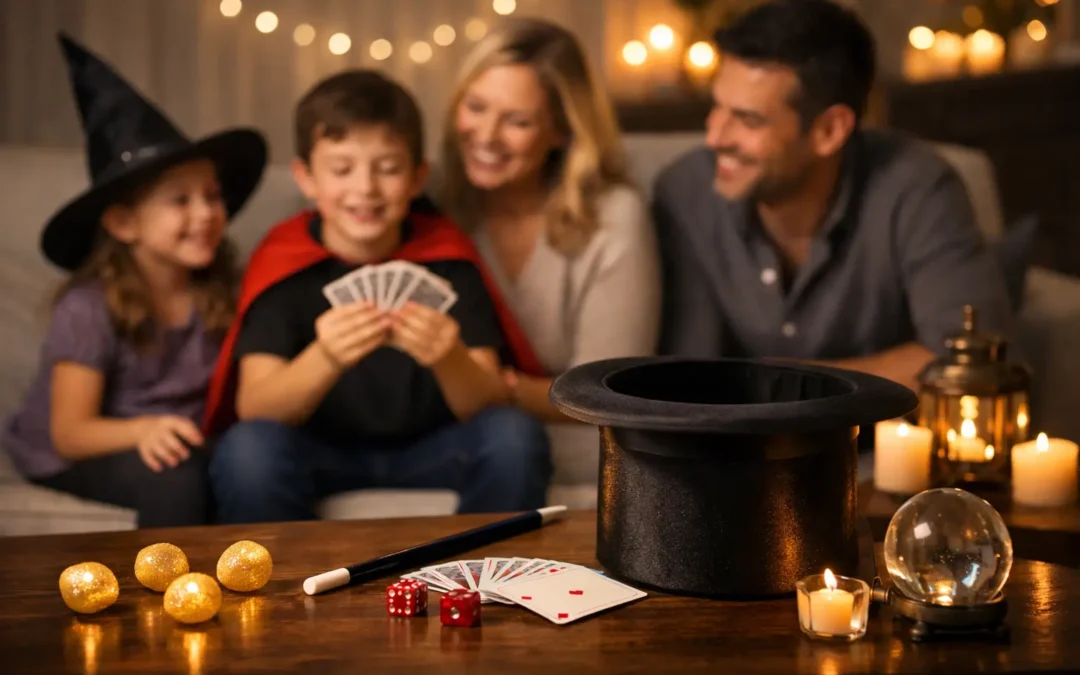
Some family nights feel great in theory and fall flat by 7:20. One person is bored, another is glued to a screen, and the snacks are somehow gone before anything fun begins. If you’re wondering how to plan a family magic night that actually feels special, the secret is not making it bigger. It’s making it more interactive, a little theatrical, and easy enough that everyone wants in.
A good family magic night has the same ingredients as a great live show – surprise, laughter, participation, and a few moments that make the room light up. You do not need a smoke machine, a stage, or a closet full of props. You just need a plan that gives kids something to anticipate and adults something to enjoy instead of merely supervising.
How to plan a family magic night without overcomplicating it
Start by deciding what kind of night you want. That choice shapes everything else. Some families want a playful, low-pressure evening with card tricks and silly predictions at the kitchen table. Others want the full event feel, complete with homemade tickets, a “performance area,” and a grand finale after dessert.
The sweet spot is usually somewhere in the middle. If the night feels too casual, it can drift. If it feels too scheduled, younger kids may lose interest. Aim for about 60 to 90 minutes of activity with a beginning, middle, and end. That gives the evening enough structure to feel like an occasion without turning it into a production marathon.
A simple timeline works well. Start with a reveal or invitation, move into one or two warm-up activities, let the main show happen, and finish with a fun closer like teaching one easy trick or handing out “magician awards.” Families with toddlers may want shorter segments. Families with older kids can stretch the show portion and add a challenge round.
Set the scene like a real event
What makes magic feel magical is anticipation. A few small details can do a lot of heavy lifting. Dim the lights a bit. Clear a space in the living room. Put a tablecloth over a card table and suddenly you have a stage. If your kids love a theme, ask everyone to dress up. A cape, a bow tie, sparkly shoes, or even “mystery guest” sunglasses can help the night feel different from an ordinary Friday.
This is also where parents can make a smart call about effort. If decorating sounds fun, go for it. If decorating sounds exhausting, skip it and focus on one strong visual touch, like printed tickets, a handmade sign, or a deck of cards set out before anyone enters the room. One theatrical detail often works better than ten rushed ones.
Music can help too, especially during setup or the “audience arrival” moment. Keep it playful and upbeat. Then turn it off once the tricks begin so the room feels focused. Silence, used well, can make a reveal land even better.
Pick activities that work for your family’s ages
The easiest mistake is planning a night around tricks that are too difficult, too long, or too fragile for the audience you have. A successful family magic night should make everyone feel involved, not sidelined.
For younger kids, lean into visual effects, guessing games, funny magician names, and tricks with simple objects like cups, coins, scarves, crayons, or paper. They love repetition, comedy, and chances to shout out a prediction. A disappearing object, a color-changing trick, or a silly wand that “misbehaves” will usually beat a complicated card routine.
For elementary-age kids, this is where things get especially fun. They are old enough to follow instructions, young enough to adore surprise, and often eager to perform. Give them a role. They can be the assistant, the ticket taker, the announcer, or the magician for one segment of the night.
For tweens and teens, the trick is respecting their radar for anything that feels babyish. Give them a challenge. Can they learn one trick in ten minutes and perform it? Can they create a believable magician character? Can they fool the adults? A little friendly competition can shift the mood from eye-rolls to real engagement.
If grandparents or extended family are joining, keep the pace relaxed and the tricks easy to follow from a distance. Family magic nights shine when they are shared across ages, but that only works if everyone can see, hear, and participate comfortably.
Build your show around three strong moments
You do not need ten tricks. You need three that land.
A strong opening should be quick and visual. It tells everyone, right away, that this is not just hanging around in the living room. Think of a surprising reveal, a prediction in an envelope, or a simple trick that gets a laugh in under a minute.
The middle is your audience participation zone. This is where someone comes up to help. A sibling picks a card. A parent hides an object. A grandparent becomes the official judge of “real magic.” This part matters because interaction is what separates a memorable night from passive entertainment.
The ending should feel bigger than the rest. It does not have to be technically impressive. It just needs to feel final. Maybe the magician correctly guesses a family secret word chosen earlier in the night. Maybe a treat appears after being “magically” covered with a cloth. Maybe everyone learns one tiny trick and performs it together. The finish is what people remember.
Snacks matter more than you think
A family event without snacks is just a meeting. But for this kind of night, timing matters. If you put everything out at once, attention may vanish into a bowl of popcorn. Serve a small snack before the show or save a themed treat for intermission.
Keep the menu easy to manage. Finger foods are best. Messy frosting and sticky hands do not mix well with cards, paper, or anything you hope to “disappear.” Popcorn, cookies, fruit skewers, mini sandwiches, and cups of lemonade or hot chocolate all work well depending on the season.
You can add a little flair with names if your family enjoys that sort of thing. “Rabbit food” for veggie cups, “magician fuel” for popcorn, or “vanishing cookies” can get a smile without adding extra work. The goal is delight, not a Pinterest stress spiral.
Let kids perform, but do not leave them stranded
One of the best parts of planning a magic night is giving children the chance to be the star. That said, confidence can disappear fast when all eyes are on them. If a child wants to perform, rehearse once or twice beforehand and keep their trick simple enough to succeed.
Good options include a forced card reveal, a cup-and-ball routine, a coin trick, or even a joke-based magic act where the comedy is part of the charm. If they forget a step, help smoothly and keep the energy upbeat. The point is not perfection. The point is applause.
Parents can also play the role of host instead of magician. Introduce acts, call for a drumroll on the table, and keep things moving. That gentle structure helps shy kids feel supported and enthusiastic kids avoid turning a five-minute segment into a 20-minute monologue.
When to keep it at home and when to make it a real outing
There is a difference between a cozy family night and a polished magic experience, and both have their place. A home magic night is perfect when you want low-key fun, a budget-friendly activity, or a creative evening that gets everyone off their screens.
But sometimes the better plan is not doing all the work yourself. If you want the laughter, amazement, and shared reaction that come from seeing a seasoned magician handle the room, live magic has an energy that is hard to recreate at home. For birthdays, special weekends, or family visits, attending a professional show can turn “something to do” into the part everyone talks about later. In Houston, families looking for that kind of intimate all-ages experience often choose Magic Show Theater because it feels personal, lively, and genuinely built for shared fun.
It really depends on what kind of memory you want to make. Home is wonderful for participation. A live show is wonderful for pure astonishment. Some families do both – watch a real magician one weekend, then let the kids put on their own version at home the next.
How to make family magic night a tradition
The easiest way to make this stick is to keep it repeatable. Do not treat it like a one-time masterpiece. Treat it like a family tradition that can evolve. One month might be a silly “close-up magic and cookies” night. Another might be a birthday weekend with costumes and a guest performer from the neighborhood.
If something works, save it. Keep a small box with cards, coins, scarves, paper slips, and a few favorite props. Write down which tricks got the biggest reactions. Let one family member choose the theme next time. Traditions grow because they are enjoyable, not because they are elaborate.
The best family magic nights leave a little sparkle behind. Not just because somebody guessed the card or made a coin disappear, but because for an hour or two everyone was fully there – laughing, watching, helping, and waiting to be surprised. That is the real trick worth repeating.