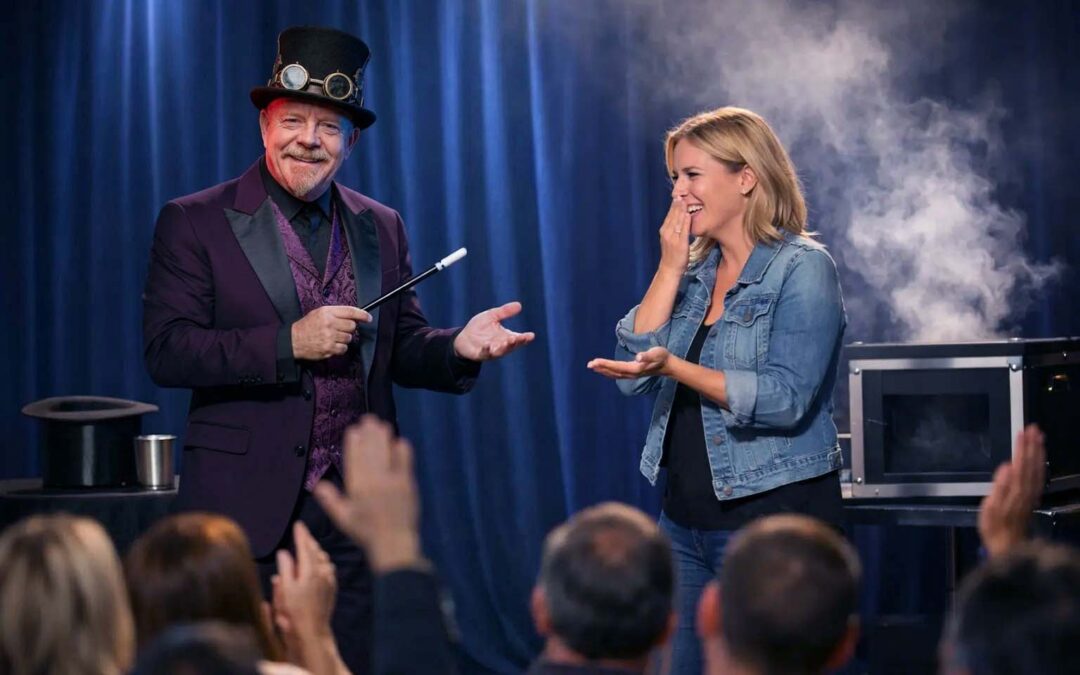
The best moment in a magic show often happens two seconds before the applause. A child is laughing too hard to sit still. A parent is pointing at the stage, sure they caught the secret. A couple gets called up, the room leans in, and suddenly everyone is part of the impossible. That is the real charm of an audience participation magic show. It does not keep the wonder at a distance. It brings people right into it.
For families, birthday groups, and anyone hunting for a night out that feels more exciting than just watching from a seat, interactive magic has a different kind of energy. It turns a performance into a shared memory. You are not only seeing something amazing. You are reacting to it together, laughing together, and sometimes becoming part of the trick yourself.
What makes an audience participation magic show different
Some live entertainment asks very little from the crowd. You arrive, watch, clap, and head home. Magic can work that way too, but it is not nearly as fun. An audience participation magic show changes the rhythm of the room because people are invited into the experience instead of staying on the sidelines.
That can mean a volunteer helping with a mystery on stage, a magician reading the reactions in the front row, or the entire audience joining in with decisions, guesses, and laughter. The result is more personal and more playful. No two shows feel exactly the same because the audience helps shape the night.
That matters for families especially. Kids do not always want to sit quietly through a formal performance, and adults do not want to spend money on a show that feels flat or forgettable. Interaction keeps everyone tuned in. Younger guests feel seen. Parents get to enjoy those unexpected, hilarious moments that only happen live. Grandparents, teens, and little kids all have a way into the fun.
Why participation creates bigger reactions
Magic gets stronger when people feel close to it. In an intimate theater, every laugh lands faster, every surprise feels sharper, and every volunteer moment raises the stakes. When a trick happens in someone’s hands or right in front of their seat, the mystery becomes more convincing and more exciting.
There is also a simple truth about live entertainment. People remember what they did more vividly than what they watched. If your child helped the magician. If your spouse got pulled into a routine. If the whole room shouted out answers and then burst into applause at the reveal. Those moments stick.
This is one reason interactive magic works so well for celebrations. At a birthday party, guests are not looking for a quiet, polished performance that keeps them at arm’s length. They want energy. They want laughter. They want that feeling that something special is happening right now, just for this group. Audience participation delivers that feeling better than almost any other format.
Audience participation magic show for families
Parents usually have the same question before booking entertainment or planning a weekend outing: will everyone enjoy this? That is where interactive magic shines.
A strong family-friendly magic show can play to several age groups at once. Kids love the silliness, the surprises, and the chance that someone from the audience might be invited up. Adults appreciate the pacing, the comedy, and the skill behind the illusions. When the show is built for all ages, nobody feels like they are just tagging along.
There is a difference, though, between audience participation and chaos. The best family magic shows know how to involve people without losing control of the room. The interaction feels safe, funny, and welcoming. Nobody is embarrassed. No one is singled out in a way that feels awkward. That balance matters a lot, especially when younger kids are in the crowd.
A veteran performer knows how to read the room and adjust. Some audiences are loud and eager. Others need a little encouragement. Great interactive magic meets people where they are and makes them feel comfortable joining in.
Why it works so well for birthday parties
Birthday entertainment has one job above all else: make the guest of honor feel like a star. An audience participation magic show does that naturally because it creates built-in spotlight moments without making the celebration feel stiff or overly scripted.
Instead of watching from the corner while something happens on a stage, the birthday child can become part of the action. Friends stay engaged because they are not just observers. Parents get photos and reactions that feel genuine instead of posed. The whole room stays lively.
For private events, the intimate theater format is a major advantage. It feels special right away. Guests are stepping into a real performance space, which adds excitement before the first trick even begins. At the same time, a smaller venue keeps the show personal. Every seat feels close. Every laugh is shared. Every moment lands.
That is a big reason families looking for birthday ideas often choose a magic experience over a standard party setup. It combines entertainment, atmosphere, and memory-making in one place. There is less pressure to invent the fun because the fun is already built into the show.
A better date night than another dinner reservation
Interactive magic is not only for kids. Couples often want a night out that feels easy, memorable, and a little different from the usual routine. An audience participation magic show checks those boxes because it gives people something to talk about before, during, and after the performance.
There is a natural spark in watching impossible things happen a few feet away. Add comedy and crowd interaction, and the whole night feels more alive. You are not whispering through a movie or waiting for the check at a restaurant. You are sharing reactions in real time.
For date nights, intimate magic has a sweet spot. It is exciting without being overwhelming, polished without feeling formal, and fun without being childish. If a couple wants a local experience that feels fresh, live interactive magic is a smart pick.
What to look for in an interactive magic experience
Not every show advertised as interactive delivers the same quality. Some rely on a few quick volunteer bits and call it audience participation. The better version is built around connection from start to finish.
Look for a performer with real stage experience, especially one who knows how to work with families and mixed-age crowds. Timing matters. So does tone. The interaction should feel natural and upbeat, not forced. A good magician can create laughter and suspense while making volunteers feel like stars.
Venue matters too. A smaller theater often creates a stronger audience experience than a large room where half the crowd feels far away from the action. Close-up reactions are part of the fun. When guests can actually see expressions, hear the banter, and feel the room respond together, the show becomes much more memorable.
If you are planning for children, it also helps to choose a show that is clearly designed to be family-friendly. That does not mean watered down. It means smart, funny, skillful entertainment that welcomes everyone in the room.
Why Houston audiences love the live, close-up feel
Houston families and local entertainment seekers have plenty of options, which means a show has to offer more than a generic night out. The appeal of a live, interactive magic performance is that it feels personal. It is not mass-produced. It is happening right in front of you, with your crowd, on that specific night.
That is part of what makes Magic Show Theater so memorable. The intimate setting, the mix of comedy and amazement, and the audience-friendly style create the kind of experience people talk about afterward. It is easy to bring the kids, fun enough for adults, and special enough for celebrations.
Whether you are planning a birthday, picking a date-night idea, or looking for something the whole family can enjoy together, interactive magic gives you more than a seat in the audience. It gives you a reason to laugh, react, and be part of the surprise.
The real magic is not only what happens on stage. It is what happens in the room when people stop being spectators and start sharing the moment.