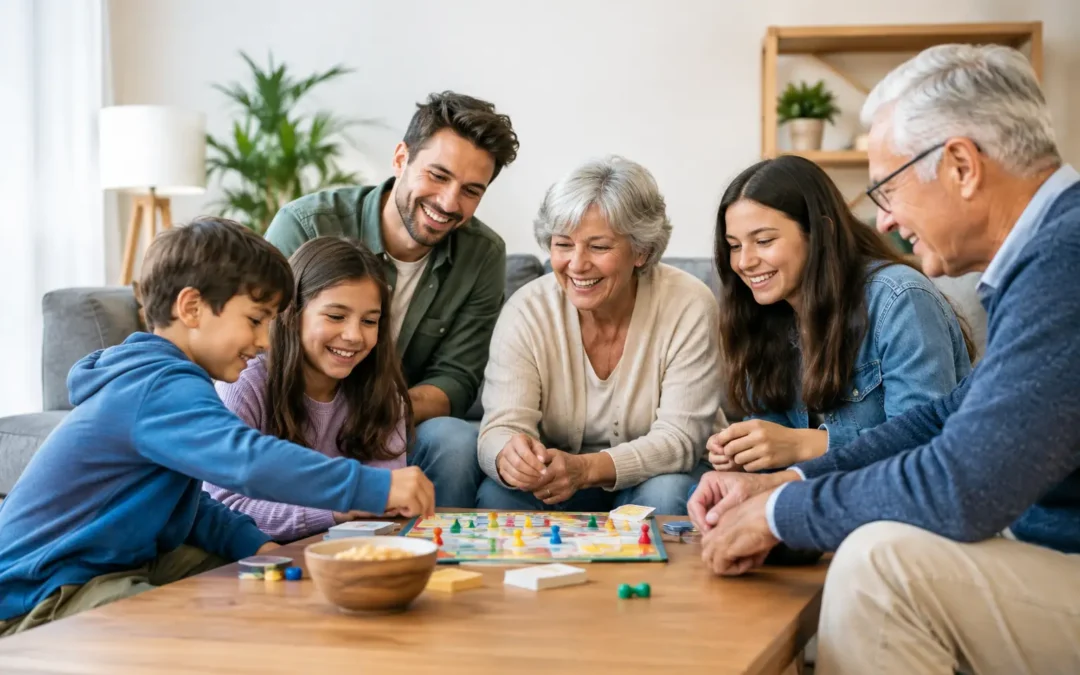
A six-year-old wants to be amazed. A teenager wants something worth talking about afterward. Parents want to relax instead of managing boredom, and grandparents want to feel included rather than parked on the sidelines. That is the real challenge of entertaining mixed age groups: finding one experience that lets everyone have a genuinely good time in the same room.
The answer is rarely an activity designed only for children and lightly tolerated by adults. The best gatherings create shared reactions. They give a whole family something to laugh at, wonder about, and remember together. When Aunt Linda is smiling at the same moment your child is shouting, “How did he do that?” you know the plan worked.
Start With a Shared Experience, Not Separate Distractions
It is tempting to plan an event around keeping the youngest guests busy. That matters, of course, but it can leave older kids and adults scrolling their phones or quietly counting the minutes. A better approach is to choose entertainment with a center of gravity: a performance, game, activity, or outing that invites every guest to pay attention at once.
Live entertainment works especially well because it creates a moment that cannot be replayed exactly the same way. The crowd’s laughter becomes part of the fun. A volunteer’s surprise becomes everyone’s surprise. A clever joke can land with the adults while the visual payoff delights the kids.
This does not mean every event needs a stage. A family game night, backyard movie, hands-on craft activity, or museum visit can succeed when it gives guests something to experience together. The key is to avoid turning one gathering into four separate entertainment zones.
Why Magic Is Built for Mixed Ages
Magic has a rare advantage at multi-generational events: wonder does not have an age limit. A preschooler may love the colorful surprise. A ten-year-old may be determined to figure out the secret. A grown-up may enjoy the comedy, timing, and impossible moment just as much as anyone else.
That range matters. Good family magic is not babyish, and it does not rely on humor that leaves younger guests out. It can be smart without being confusing, playful without being chaotic, and surprising without needing anything too scary or edgy.
At an intimate live show, the experience becomes even more personal. Guests are close enough to see expressions, react to the performer, and feel that the impossible is happening right in front of them. There is a big difference between watching a trick on a screen and seeing an object vanish inches away while the whole room gasps.
That is why a magic show can be a terrific choice for birthdays, visiting relatives, family weekends, and celebrations where the guest list spans several decades. At Magic Show Theater, audiences come together for comedy, illusions, and audience participation in a setting built to make every seat feel close to the action.
Plan for Different Attention Spans Without Lowering the Bar
The biggest mistake in entertaining mixed age groups is assuming short attention spans mean the entertainment must be simple. Kids can follow a story, appreciate suspense, and enjoy a longer experience when the pace changes often enough. Adults feel the same way.
Look for an activity with variety. A show might combine visual moments, comedy, audience participation, and a few surprises. A party might shift from arrival time to food, then a central activity, cake, and a final photo moment. Variety keeps energy moving without making the day feel rushed.
Keep the schedule comfortably short
An overstuffed event wears everyone out. If young children are involved, a two-hour birthday party can feel fuller and more enjoyable than an all-day plan with too many moving pieces. For an evening outing, consider travel time, dinner, and bedtimes before choosing a start time.
Older guests often appreciate this, too. A clear plan feels welcoming. They know when to arrive, where to sit, when the main event begins, and when they can head home without feeling like they missed the best part.
Give guests a role in the fun
Participation creates connection, but it should always be invitation-based. Some people love getting called up to help. Others would rather laugh from their seats. The best entertainment makes room for both kinds of guests.
For a home gathering, that might mean a low-pressure trivia question, a group photo challenge, or a chance for each person to share a favorite memory. At a live performance, it means a performer who knows how to invite volunteers warmly without putting anyone on the spot.
Make the Adults Feel Like Guests, Too
Parents often do the invisible work at family events. They organize snacks, settle disagreements, watch the clock, take photos, and make sure every child has what they need. If the entertainment requires constant parent supervision, it may not feel like much of a break.
Choose activities that are organized, welcoming, and easy to understand. Clear arrival details, comfortable seating, sensible pacing, and a friendly host all make a difference. The adults should not have to spend the event explaining rules or rescuing a plan that is not working.
This is especially important for birthday parties. A child deserves to feel celebrated, but their parents deserve to enjoy the celebration, too. A professional entertainer or dedicated venue can remove much of the pressure, letting families focus on cake, photos, laughter, and their guests instead of a stack of party logistics.
Leave Room for Conversation Between the Big Moments
Shared entertainment is the spark, but conversation is what stretches the memory beyond the event itself. Do not schedule every minute. Let cousins compare favorite moments. Let grandparents tell a story prompted by something they saw. Let kids explain, with great confidence, how they think the impossible trick was done.
Food helps here, but it does not have to be elaborate. The goal is simply to create a comfortable pause before or after the main activity. For a birthday party, cake and a few easy snacks may be plenty. For a family outing, dinner before the show or ice cream afterward can turn a fun performance into a full evening together.
Consider the setting, too. Loud restaurants and sprawling venues can make it hard for generations to connect. A more intimate environment gives people the chance to share reactions instead of getting separated by noise, distance, or competing distractions.
Choose Wonder Over “Something for Everyone”
Trying to please every person individually can make planning feel impossible. One guest wants action, another wants calm, another wants something educational, and someone else just wants good snacks. Instead of chasing a separate solution for each person, choose an experience that creates a feeling everyone can share.
Wonder is one of those feelings. So are laughter, friendly suspense, and the delight of seeing someone you love surprised. These are not age-specific reactions. They are human ones.
There are trade-offs, naturally. A toddler may need a shorter program and an earlier start. A teen may respond better when the entertainment feels genuinely clever rather than overly childish. A grandparent may value easy parking, accessible seating, and a schedule that is clear from the beginning. Planning well means honoring those practical needs while keeping the central experience joyful.
When you are deciding what to do for your next birthday, family visit, or weekend celebration, look for the moment that will make everyone lean forward at once. That shared gasp, laugh, or round of applause is more than entertainment. It is the part people will still be talking about on the drive home.