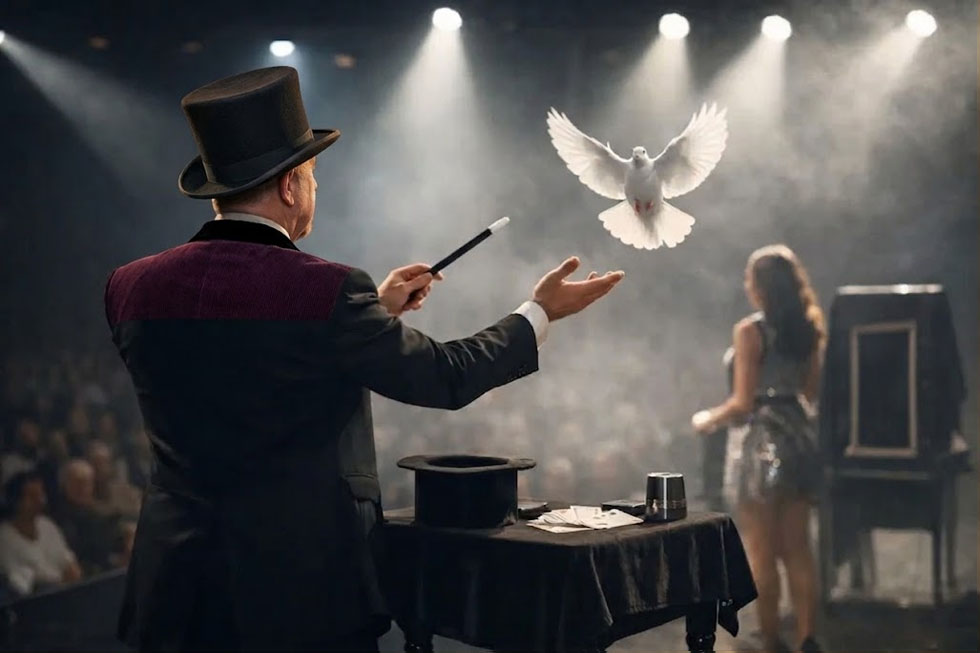
The best moment in a magic show usually happens a split second before the applause. A card appears where it should not be. A borrowed object vanishes. Someone in the audience laughs, points, and says, “No way.” If you have ever wondered how live magic shows work, that reaction is the real starting point. Magic is not just about tricks. It is about building a moment so clean, surprising, and fun that people stop trying to predict what comes next and simply enjoy being amazed.
How live magic shows work behind the curtain
Most people assume a magic show runs on secret gadgets or lightning-fast hands alone. Sometimes those things matter, but a strong live performance is really a mix of method, timing, psychology, staging, and personality. The secret is rarely just one move. It is the way every piece works together.
A magician is not only fooling your eyes. They are guiding your attention, setting expectations, and controlling the pace of the room. That matters even more in a live theater, where there are no camera cuts, no editing, and no second takes. What you see happens right in front of you, which is exactly why live magic feels so exciting.
Theater also changes the experience. In an intimate room, every reaction spreads fast. If one table gasps, the whole audience feels it. If a volunteer bursts out laughing, that energy lifts the next routine. Great live magic is a shared experience, not a puzzle handed to one person at a time.
It starts with structure, not secrets
A polished magic show is carefully built from the first moment to the last. The opening needs to grab attention quickly. The middle has to vary the pace so the audience does not feel like they are watching the same effect over and over. The ending needs to land big.
That means performers think about more than individual tricks. They think about rhythm. A fast visual effect might be followed by a comedy piece with audience participation. A smaller mystery may lead into a stronger illusion. This keeps the show lively and helps each effect feel fresh.
For family audiences, that balance matters even more. Kids want surprise and motion. Adults want wit, skill, and a reason to stay engaged. The strongest shows give both groups something to enjoy at the same time.
Misdirection is not what most people think
When people hear the word misdirection, they often imagine a magician waving one hand around so you miss what the other hand is doing. That can happen, but real misdirection is usually subtler than that.
Good misdirection is about attention management. The magician gives your brain a clear story about what matters, and your mind naturally follows it. Maybe you are listening to a funny line. Maybe you are focused on a volunteer making a choice. Maybe you believe the important moment has already happened when it actually has not.
In a live show, this works because attention is limited. No one can track every detail at once. A skilled performer understands where people look, what they assume, and when they relax. The trick often happens in that small window.
How live magic shows work with audience participation
Audience interaction is one of the biggest reasons live magic feels different from watching something on a screen. When a guest picks a card, examines a prop, or joins the magician on stage, the impossible feels more believable. People trust what they see other people experience up close.
That does not mean volunteers are random in the way many people think. A professional performer knows how to choose helpers, guide them clearly, and keep the moment comfortable. The goal is never to embarrass someone. The goal is to make them part of the fun.
This is especially important in all-ages entertainment. Parents want a show that feels exciting without becoming awkward. Kids want to feel included, not talked down to. Great magicians know how to bring people into the act in a way that creates laughs and wonder at the same time.
Why intimate venues make magic stronger
Big stage illusions can be impressive, but smaller theaters have a special advantage. In a close-up or parlor setting, the audience feels connected to every moment. You can see expressions, hear reactions, and sense the tension before the reveal. That closeness raises the stakes.
It also changes what kind of magic plays best. In an intimate theater, sleight of hand, mentalism, comedy magic, and interactive routines can hit incredibly hard because they feel personal. A borrowed ring or signed card means more than a generic prop when the audience can follow the entire journey from just a few feet away.
That is one reason venues like Magic Show Theater create such memorable nights out. The room itself becomes part of the experience. It feels less like watching a distant performance and more like being inside the mystery.
The role of comedy, character, and trust
A magic show is not just a demonstration of skill. If it were, people would clap politely and move on. What makes it memorable is the performer.
Comedy helps because laughter lowers defenses and brings the audience together. A funny line can reset the room after a big surprise. It can also make a difficult method invisible by giving people another reason to focus where the magician wants them to focus. That is not cheating the audience. That is showmanship.
Character matters too. Some magicians play mysterious. Some play bold. Some are warm, witty, and a little mischievous. The style changes the experience. Families often respond best to performers who feel confident and polished but still approachable. You want to feel like you are in good hands, especially if your child is being invited onstage.
Trust is a bigger part of magic than people realize. The audience has to believe the performer is in control. They need to feel safe enough to relax, laugh, and participate. That trust gives the magician room to build suspense and surprise.
Practice makes the impossible look effortless
The easiest way to misunderstand magic is to think the trick is the whole job. In reality, hours of rehearsal sit behind every smooth moment onstage. Moves have to be clean. Lines have to sound natural. Props have to be placed exactly where they are needed. Lighting cues, music, and audience sightlines all matter.
And even then, live performance always includes variables. A child answers unexpectedly. A volunteer stands in the wrong place. A laugh runs longer than expected. A prop behaves differently in a humid room than it did in rehearsal. Experienced magicians build flexibility into the act so the show still feels effortless.
That is one of the big differences between amateur tricks and professional live magic. Professionals are not just good when conditions are perfect. They are good when real audiences are involved.
Why the experience feels so memorable
Magic works because it creates a rare kind of shared surprise. Most entertainment gives you a story to follow. Magic gives you a moment you cannot fully explain. That sticks with people.
For couples, it makes a date night feel playful instead of routine. For families, it gives kids and adults a reason to react together. For birthday parties, it turns the guest of honor into part of the excitement. And for local audiences looking for something different, it offers a night out that feels personal rather than mass-produced.
That is also why live magic often gets talked about long after the show ends. People replay the moment. They compare what they thought they saw. They laugh about the volunteer who stole the scene. The performance keeps going in conversation, which is exactly what great entertainment should do.
If you have been curious about how live magic shows work, the short answer is this: they work because talent meets timing, secrets meet storytelling, and technique meets personality. But the better answer is something simpler. They work because, for one evening, a room full of people gets permission to be surprised together.
If that sounds like your kind of night, it probably is. The best way to understand live magic is still the most fun way – grab a seat, bring someone you like, and let the impossible happen a few feet away.